54B, Tailstoi Town 5238 MT,
La city, IA 522364


Chirokind & Rehabilitation Clinic focuses on maintaining health for people of all ages, helping patients pain and prevent disease.
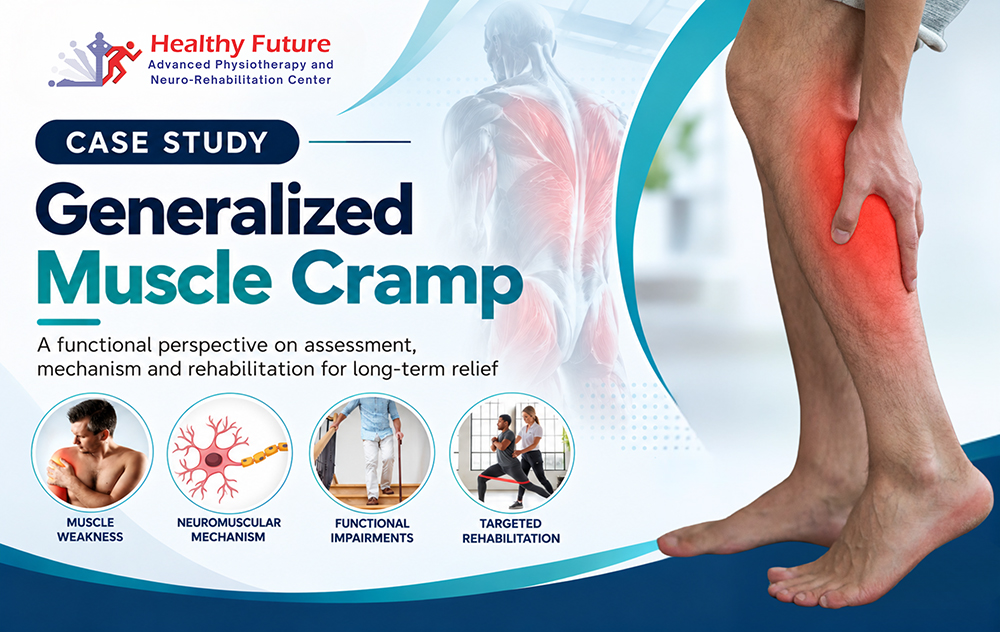
Muscle cramps are sudden, involuntary, and painful contractions of muscles that can significantly affect daily activities and quality of life. They are commonly associated with electrolyte imbalances, dehydration, neurological disorders, and nutritional deficiencies. However, in some cases, functional factors such as muscle weakness, poor postural control, and altered movement patterns may play a major role in the development of generalized muscle cramps. Identifying these contributing factors is essential for effective management and longterm relief.
A 45-year-old female had been experiencing generalized muscle cramps for approximately 1year. The episodes were sudden, painful, and involuntary, often triggered by minimal muscular effort. The symptoms were unpredictable and significantly affected her mobility and confidence in performing daily activities.
Prior to presentation, she had undergone multiple interventions including neurological medications, dietary modifications, supplements, and regular yoga/stretching. She reported temporary pain relief while on medication; however, symptoms recurred after discontinuation, indicating only short-term benefit.
Despite these measures, the patient continued to experience frequent, disabling cramps with no sustained improvement.
On clinical evaluation, the patient presented with generalized muscle weakness (reduced strength on manual muscle testing), decreased postural control, and impaired neuromuscular coordination. Functional assessment revealed poor balance and inefficient movement patterns during basic activities.
These deficits contributed to increased muscle fatigue and excessive muscle activation, predisposing the patient to recurrent cramping even during low-intensity tasks. No significant neurological or structural abnormalities were identified on examination.
Overall, the findings suggest that the patient’s symptoms were primarily due to functional impairments rather than purely metabolic or neurological causes.
Sustained muscle cramps induced by weakness follow a specific neuromuscular mechanism where premature fatigue disrupts the signals between your muscles and your spinal cord. When a muscle is weak, it reaches a state of overload much faster, triggering a failure in the “reflex loop” that normally keeps contractions.
1. The Trigger: Premature Overload In a weak muscle, motor units must work significantly harder to produce the same force as a healthy muscle. This causes rapid metabolic depletion and fatigue, which is the essential precursor for the cramp mechanism to begin.
2. The Mechanism: Spinal Reflex Failure Your spinal cord constantly balances two opposing signals to control muscle contraction. In a weakened, fatigued state, these signals become altered;
Hyper-Excitation: Muscle spindles, which detect muscle length, become over-sensitive. They send excessive excitatory signals to the spinal cord, essentially demanding the muscle keep contracting.
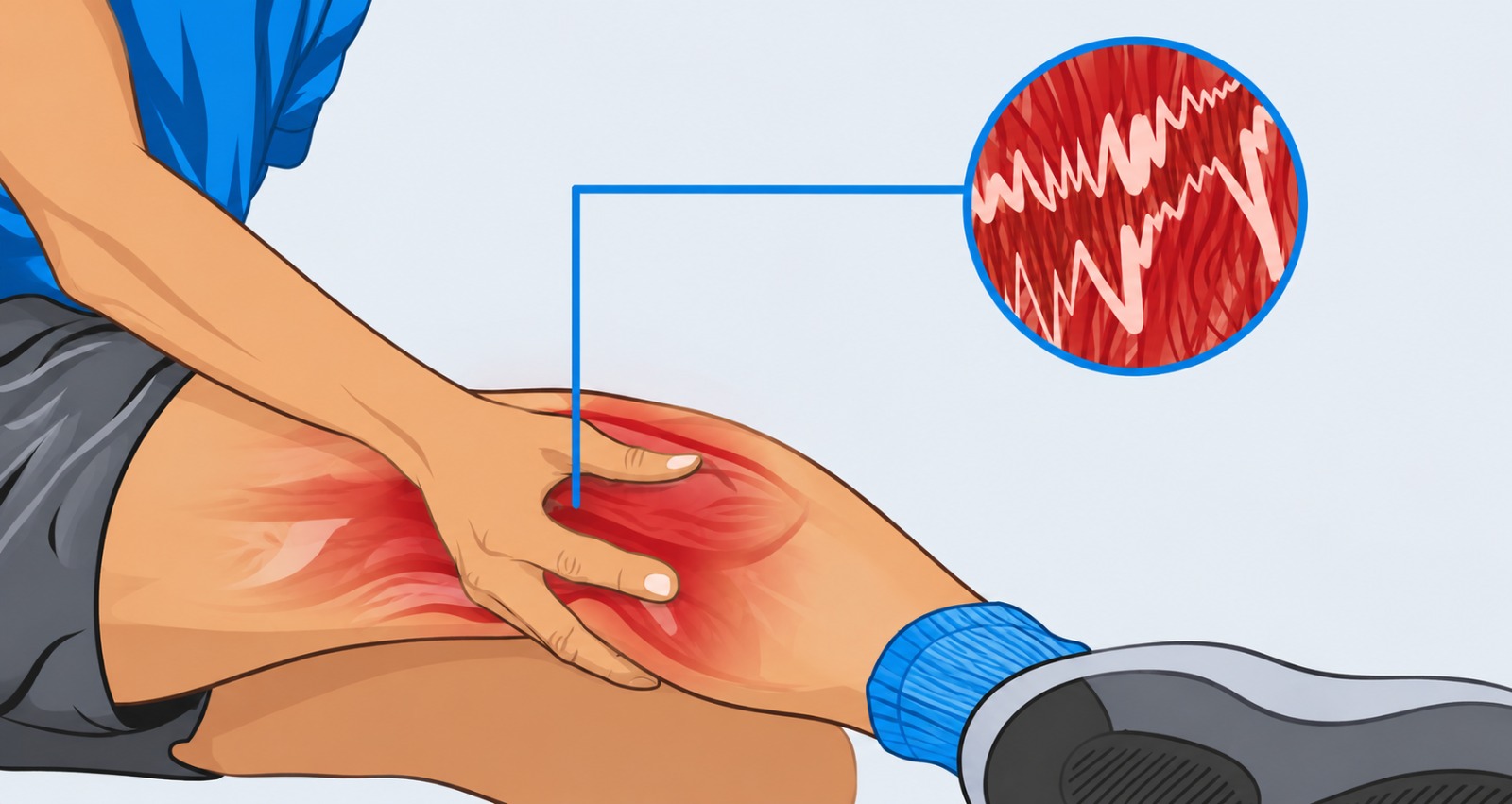
Hypo-Inhibition: The Golgi Tendon Organs (GTOs), located in your tendons, normally act as a safety brake. When they detect too much tension, they send a signal to shut down the contraction. Fatigue “muffles” these GTOs, effectively removing the neurological brakes from the system.
3. The Result: Tetanic “Lock” With the “gas pedal” stuck down and the “brakes” failed, the alpha motor neurons in the spinal cord enter a state of uncontrolled hyperactivity. They begin firing high-frequency electrical pulses back to the muscle.
Because the signals arrive so quickly, the muscle fibers cannot relax between pulses. The twitches fuse into a sustained, painful contraction.
Based on these findings, a structured rehabilitation program was initiated, focusing on strengthening exercises for major muscle groups, balance training, coordination exercises, and neuromuscular re-education. The program was gradually progressed in intensity and complexity according to the patient’s tolerance and functional capacity.
The primary aim was to improve muscle strength, enhance postural stability, and restore efficient movement patterns. This approach helped reduce excessive muscle activation, improve endurance, and minimize cramp triggers during daily activities.
Muscle cramps are not always purely metabolic or neurological in origin and may result from functional impairments such as muscle weakness, reduced postural control, and impaired neuromuscular coordination. These deficits can lead to altered movement patterns, increased muscle fatigue, and excessive muscle activation, making the individual more prone to recurrent cramping even during low-intensity activities.
Pharmacological management may provide temporary symptomatic relief; however, it does not address the underlying impairments, which explains the recurrence of symptoms after discontinuation. In contrast, targeted physiotherapy focuses on correcting these deficits through strengthening exercises, balance training, and neuromuscular reeducation. This approach improves muscle endurance, enhances postural stability, and restores efficient movement patterns.
As a result, patients experience significant and sustained improvement, with reduced frequency and intensity of cramps. Therefore, a combined approach involving short-term pharmacological support and structured physiotherapy intervention is essential for long-term management and prevention of recurrence.